See Your Entire Refrigeration System in Real Time
Advanced temperature, pressure, superheat, subcooling, trending and data acquisition for single-stage and multi-stage
The Refrigeration System Monitor (RSM) is designed to monitor single stage and multi-stage cascaded cooling systems that employ refrigerants. The basic system is able to monitor up to sixteen (16) temperatures and up to eight (8) pressures. The RSM can be expanded to monitor up to four (4) refrigeration systems or stages at once each having sixteen (16) temperatures and eight (8) pressures for a total of sixty four (64) temperatures and thirty two (32) pressures.
Real-Time Refrigeration System Analysis, Monitoring & Diagnostics
The Unidec Refrigeration System Monitor (RSM) is a comprehensive hardware and software platform designed for real-time monitoring, testing, evaluation, and troubleshooting of refrigeration systems.
RSM simultaneously measures system temperatures and pressures, converts refrigerant pressures into corresponding saturation temperatures, and provides operators and engineers with a visual representation of refrigeration system performance.
The system is designed to support both single-stage refrigeration systems and complex multi-stage or cascaded refrigeration systems, making it an effective diagnostic and commissioning tool for commercial, industrial, laboratory, pharmaceutical, and process refrigeration applications.
See the Entire Refrigeration Cycle in Real Time
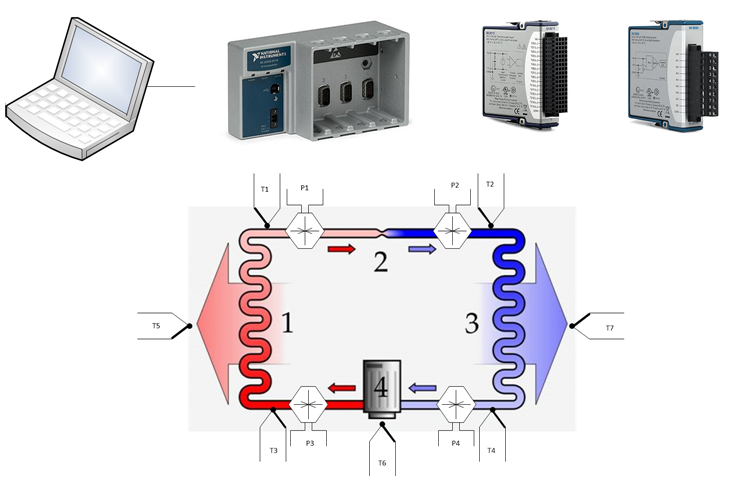
RSM allows technicians and engineers to instrument a refrigeration system and view operating conditions directly on a graphical representation of the equipment.
Temperature and pressure sensors can be positioned directly on a system diagram or P&ID, allowing live readings to appear at their actual measurement locations.
Instead of interpreting disconnected gauges and measurements, RSM provides a centralized view of the complete refrigeration cycle:
Compressor → Condenser → Expansion Device → Evaporator
The result is an intuitive real-time picture of how the refrigeration system is operating.
Monitor Up to Four Refrigeration Systems or Stages Simultaneously
A single RSM system configuration can monitor Up to 16 temperature measurements and Up to 8 pressure measurements. RSM can be expanded to monitor as many as four refrigeration systems or refrigeration stages simultaneously, providing a maximum capacity of:
- 64 Temperature Measurements
- 32 Pressure Measurements
This capability makes RSM particularly useful for evaluating multi-stage and cascaded refrigeration systems, where temperatures and pressures across multiple refrigeration circuits must be analyzed together.
Comprehensive Refrigeration Measurements
RSM combines multiple measurement and analytical functions within one integrated platform.
Temperature Monitoring
RSM uses thermocouple measurement modules to continuously monitor temperatures throughout the refrigeration system.
Supported thermocouple types include: B, E, J, K, N, R, S and T
Temperature measurement points can be placed at critical locations such as:
- Compressor suction and discharge
- Condenser inlet and outlet
- Liquid line
- Expansion device inlet and outlet
- Evaporator inlet and outlet
- Refrigerated spaces
- Heat exchangers
- Intermediate cascade stages
User-defined minimum and maximum limits can be configured for each temperature channel. When measurements move outside those limits, RSM provides color-coded visual warnings, helping operators quickly identify abnormal operating conditions.
Pressure Monitoring
RSM supports industrial 4–20 mA pressure transducers for monitoring refrigeration system pressures. Each refrigeration system can support up to eight pressure measurements. Sensor ranges can be individually configured so RSM correctly scales the incoming 4–20 mA signal into engineering units. Pressure measurements can be used to monitor:
- Compressor suction pressure
- Compressor discharge pressure
- Condenser pressure
- Liquid-line pressure
- Evaporator pressure
- Intermediate cascade pressures
- Other critical refrigeration circuit locations
User-defined pressure limits provide immediate visual indication of abnormal high- or low-pressure conditions.
Refrigerant Pressure-to-Temperature Conversion
One of the most powerful features of RSM is its ability to convert measured refrigerant pressure into the corresponding refrigerant saturation temperature. RSM uses refrigerant-specific pressure/temperature data to calculate a Temperature Converted Pressure (TCP) value. The software therefore provides three important pieces of information simultaneously:
- Actual Pressure
- Actual Measured Temperature
- Calculated Refrigerant Saturation Temperature
These values allow RSM to perform refrigeration-specific calculations that would otherwise require manual gauges, temperature probes, pressure-temperature charts, and calculations.
Automatic Superheat and Subcooling Analysis
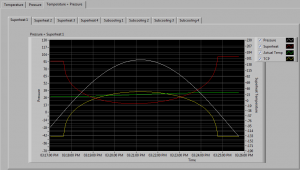
RSM can associate individual thermocouples with corresponding pressure transducers to automatically calculate refrigeration temperature differentials. The configuration system allows the operator to assign temperature and pressure channels for superheat and subcooling calculations. This makes it possible to continuously evaluate refrigeration system performance while the equipment is operating.
RSM displays and trends:
- Actual Refrigerant Pressure
- Saturation Temperature Derived from Pressure
- Actual Measured Line Temperature
- Temperature Differential
- Superheat
- Subcooling
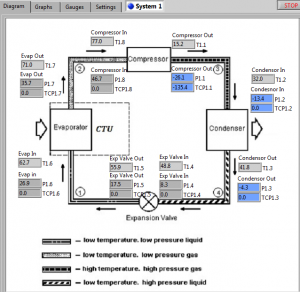
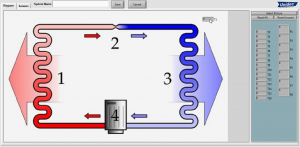
Live Graphical System Diagram
RSM allows the user to import a refrigeration system diagram or P&ID and place live sensor indicators directly onto the image.
Temperature and pressure measurements can therefore be displayed exactly where they occur physically in the refrigeration system. During testing, the Diagram View provides a real-time visual representation of system operation. Sensor indicators dynamically display operating values and change appearance when configured operating limits are exceeded. This approach allows an operator to quickly identify where a refrigeration problem is developing without having to interpret multiple independent instruments.
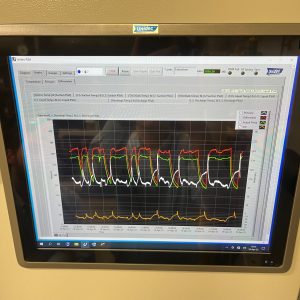
Real-Time Trending & Graphing
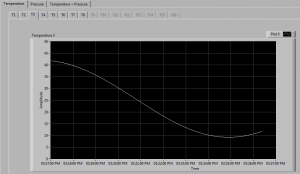
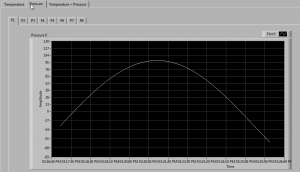
RSM continuously plots system measurements against time.
The Graphing interface can display:
- Temperature Trends
- Pressure Trends
- Refrigerant Saturation Temperatures
- Temperature and Pressure Differentials
- Superheat
- Subcooling
Operators can select individual measurements or review combined system trends to observe how refrigeration conditions interact over time. RSM graphs sensor measurements and calculated values in real time, allowing transient events, equipment cycling, startup behavior, and system instability to be observed as they occur. Graphs can also be saved for later analysis and documentation.
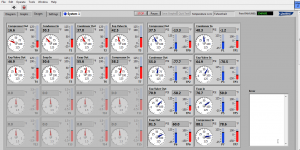
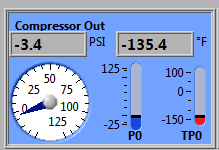
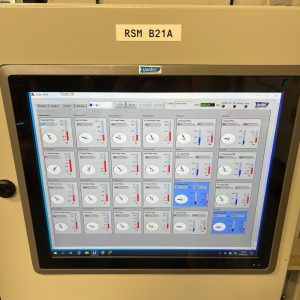
Gauges
Real-Time Gauges for technicians who prefer an instrumentation-style interface, RSM includes a dedicated Gauge View. The gauge display provides immediate numerical visualization of active refrigeration measurements. Only sensors configured for the refrigeration system are displayed, creating a customized instrumentation panel for each system being tested. Users can switch between refrigeration systems while a multi-system test is running. The RSM test interface provides four primary operating views:
- Diagram
- Graphs
- Gauges
- Settings
Configurable Alarm & Operating Limits
RSM allows operators to define expected operating ranges for system measurements.
Configured limits can include:
- Minimum temperature
- Maximum temperature
- Minimum pressure
- Maximum pressure
- Pressure-derived temperature limits
During operation, RSM provides color-coded indications when measurements exceed configured limits.
This allows abnormal refrigeration conditions to be identified quickly during:
- Commissioning
- Qualification
- Troubleshooting
- Preventive maintenance
- Performance testing
- System optimization
Continuous Data Acquisition & Test Recording
RSM is not simply a live monitoring display.
The system continuously records refrigeration test data for later review and analysis.
Recorded test information includes:
- Temperatures
- Pressures
- Pressure-derived temperatures
- Time stamps
- Calculated refrigeration data
Test data can be stored in files suitable for analysis and reporting using spreadsheet software.
RSM automatically associates test data with the selected system configuration and can generate organized test filenames containing the configuration name, date, and system number. Temperature, pressure, TCP data, and timestamps are recorded during testing, while graphs can also be saved independently.
Built on National Instruments Data Acquisition Technology
RSM integrates Unidec software with National Instruments CompactDAQ data acquisition hardware.
The base system architecture uses:
- NI CompactDAQ chassis
- NI 9213 16-channel thermocouple input modules
- NI 9203 8-channel 4–20 mA input modules
This modular architecture allows RSM to be configured according to the size and complexity of the refrigeration system being evaluated. A smaller configuration can monitor a single refrigeration system, while expanded CompactDAQ configurations can support multi-system and multi-stage installations.
Create Reusable Refrigeration Test Configurations
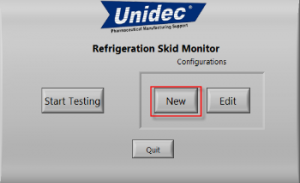
RSM allows engineers to create and save customized test configurations for individual refrigeration systems.
Each configuration can define:
- System diagram or P&ID
- Temperature sensor locations
- Pressure sensor locations
- Sensor names and equipment designators
- Thermocouple type
- Temperature units
- Sensor operating ranges
- Pressure transmitter ranges
- Refrigerant type
- Alarm limits
- Pressure-to-temperature conversion parameters
- Superheat and subcooling channel assignments
Once created, configurations can be saved, reused, and edited for future testing.
This makes RSM particularly effective for repeated testing of standardized refrigeration equipment or multiple identical systems.
Designed for Engineering, Commissioning & Troubleshooting
RSM brings together instrumentation that traditionally requires several separate tools. Instead of manually collecting readings from gauges, thermometers, thermocouples, data loggers, and refrigerant pressure-temperature charts, RSM provides a centralized measurement and analysis platform.
Typical applications include:
- Refrigeration System Commissioning – Verify system operation during startup and equipment qualification.
- Troubleshooting – Capture temperatures, pressures, and system behavior during intermittent or difficult-to-diagnose problems.
- System Optimization – Analyze superheat, subcooling, pressure relationships, and refrigeration-cycle performance.
- Multi-Stage Refrigeration Analysis – Monitor multiple refrigeration stages simultaneously to understand interactions within cascade systems.
- Long-Term Performance Testing – Record operating data over extended periods to identify cycling behavior, drift, and transient events.
- Qualification & Validation Support – Generate documented system performance data for applications requiring structured testing and engineering analysis.
A Complete View of Refrigeration System Performance
The Unidec Refrigeration System Monitor combines:
- Real-time data acquisition
- Temperature and pressure monitoring
- Graphical P&ID visualization
- Refrigerant pressure-to-temperature conversion
- Automatic superheat and subcooling analysis
- Real-time trending
- Gauge displays
- Configurable alarms
- Multi-system monitoring
- Continuous test data recording
- into a single integrated refrigeration diagnostic platform.
RSM transforms refrigeration measurements into an understandable, visual representation of the complete refrigeration process—allowing engineers and technicians to see how the entire system is performing, identify abnormal conditions, and document system behavior over time.